HACCP plans, deviations and CAPA, recalls, prerequisite programs, supplier approval and compliance readiness, all running on your live production data.
NutraSoft Quality Control is its own application, sharing one sign-in and one set of production records with your ERP. Readiness is measured against the records that actually exist at your site, so a control with nothing behind it reads as a gap rather than a box somebody ticked.
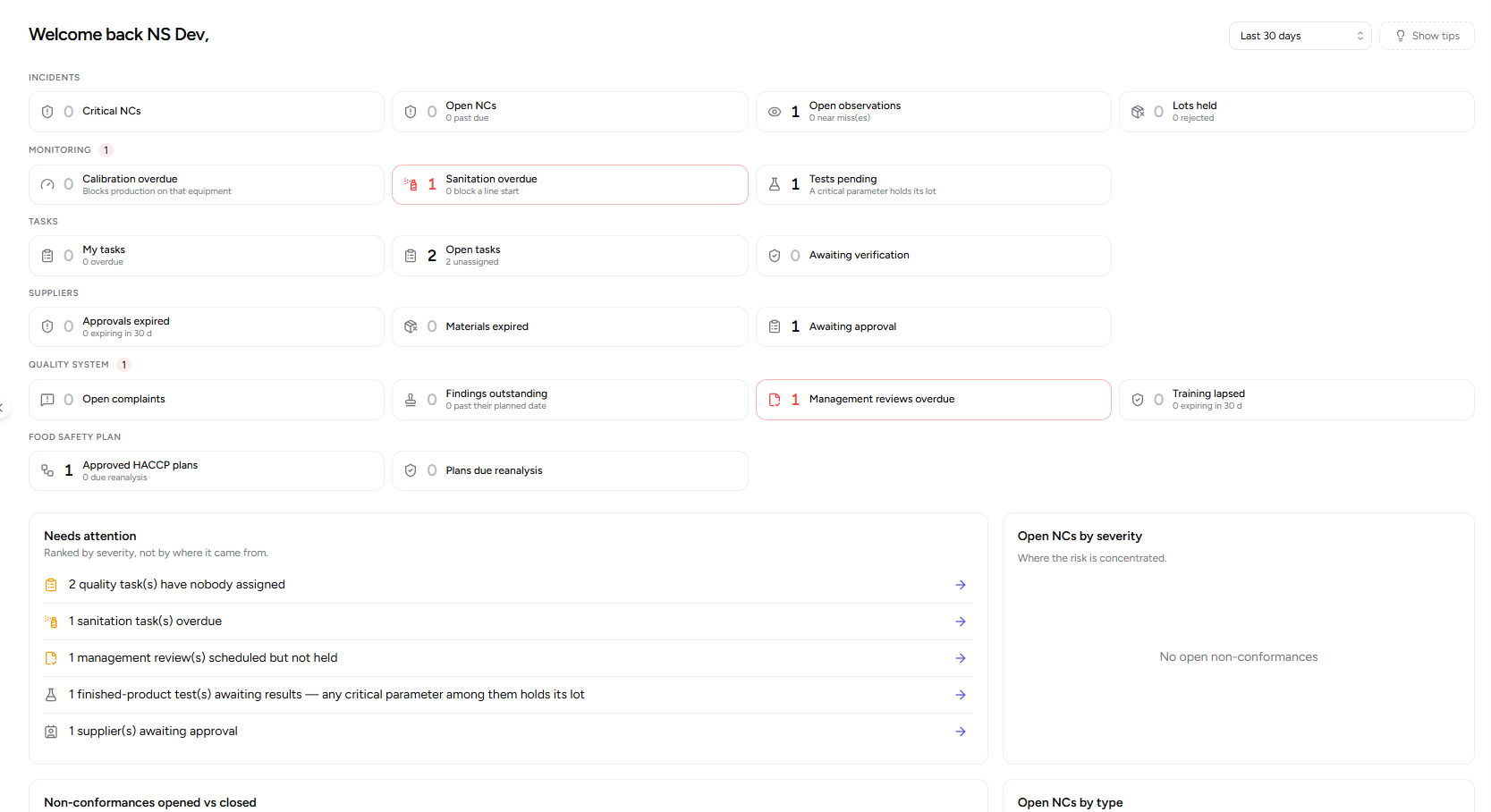
Most quality modules bolt an inspection form onto an ERP. NutraSoft Quality Control is a purpose-built application for the person who owns food safety: the HACCP plan and its decision tree, the deviation and CAPA register, the recall console, the prerequisite programs, sanitation and pre-operational verification, calibration, finished-product testing, food defense, crisis plans, complaints, internal audits, management review, specifications and supplier approval.
It runs at its own address, on the same sign-in and the same records as the ERP, so QA gets a workspace built for the job while operators keep the production screens they already use. Every quality screen, label and validation message is served in English, French, Spanish and Portuguese.
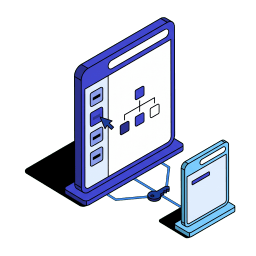
Its own address, navigation and permission tree, over the same sign-in as the ERP.
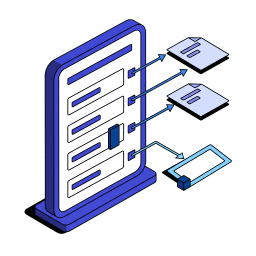
Every control points at real records at your site. Nothing there means a gap.
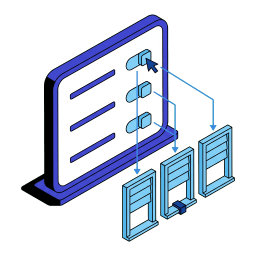
Positive release, holds and supplier blocks are policies you switch on, and the system then holds them.
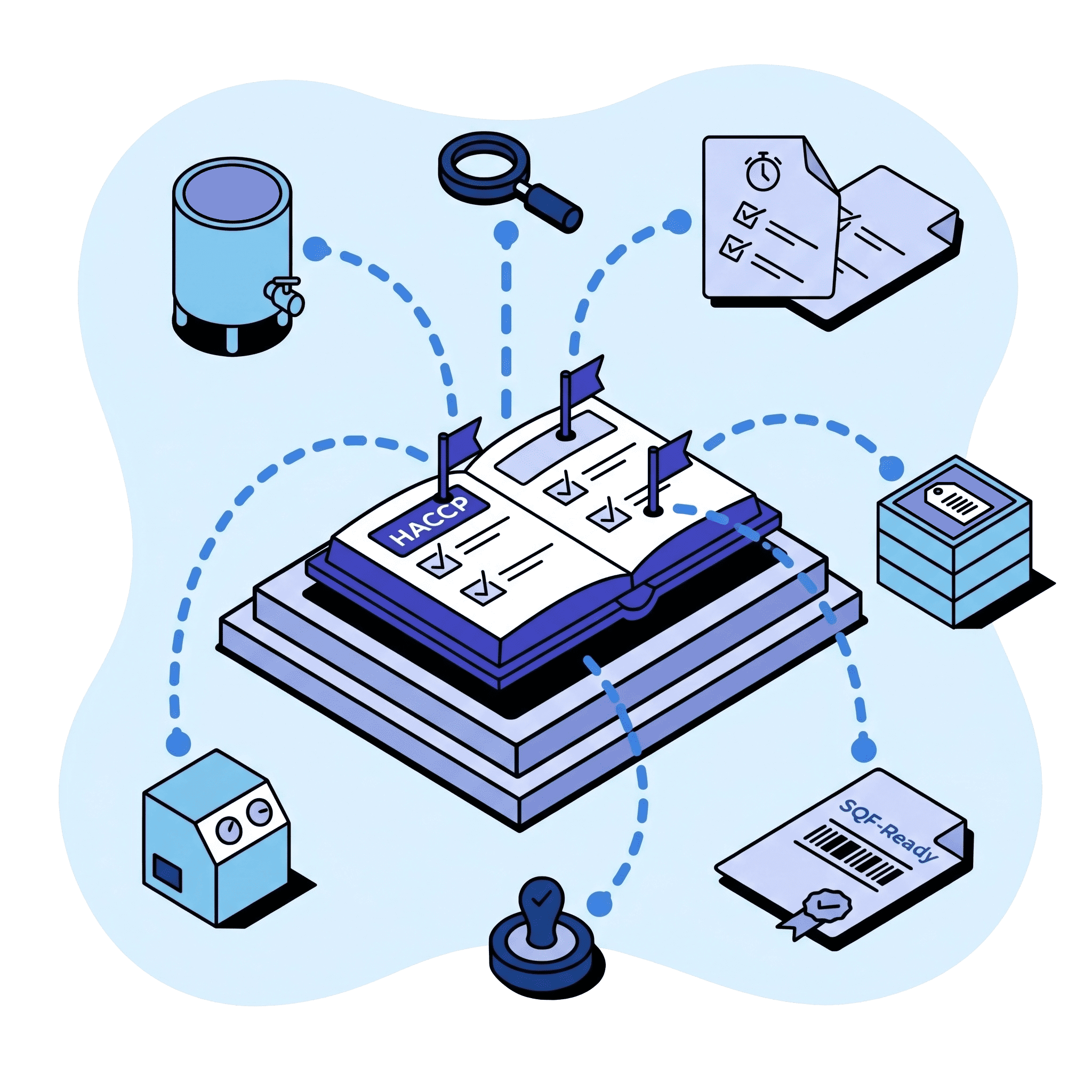
Build a versioned plan scoped to a product or a product tag, record the Codex preliminaries, lay out the process flow, and score each hazard on a 1-5 likelihood by severity matrix before walking it through the Codex 2022 decision tree.
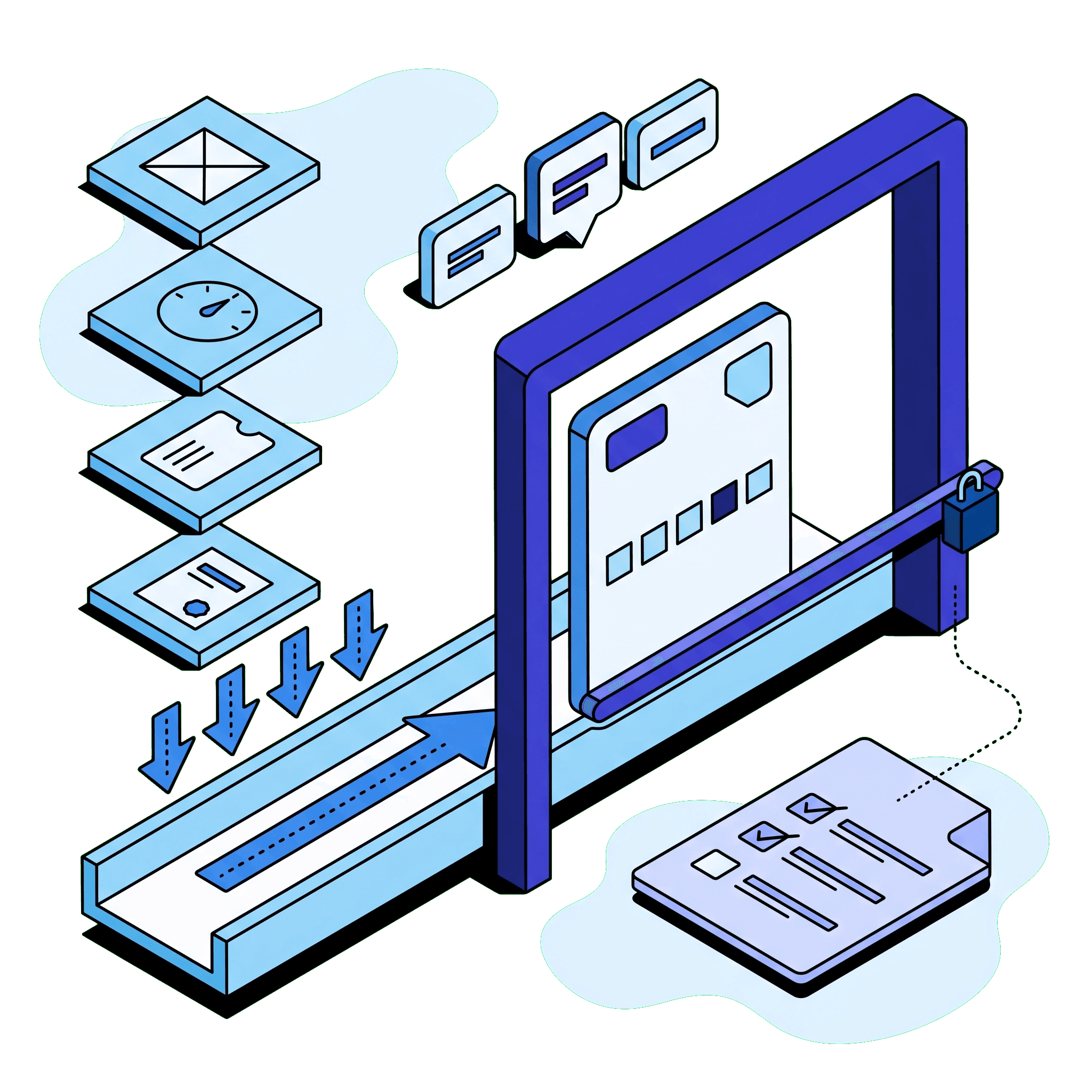
Non-conformances are classed as a deviation, an observation or a near miss, tagged with their program and risk-scored 1-5. Failed checkpoints, calibrations, complaints and audit findings open them without anybody remembering to.

Name the trigger and the implicated lot, and affected lots assemble from forward genealogy, including the transfer siblings a trace on lot id alone would lose. A real recall freezes stock; a mock drill never does.
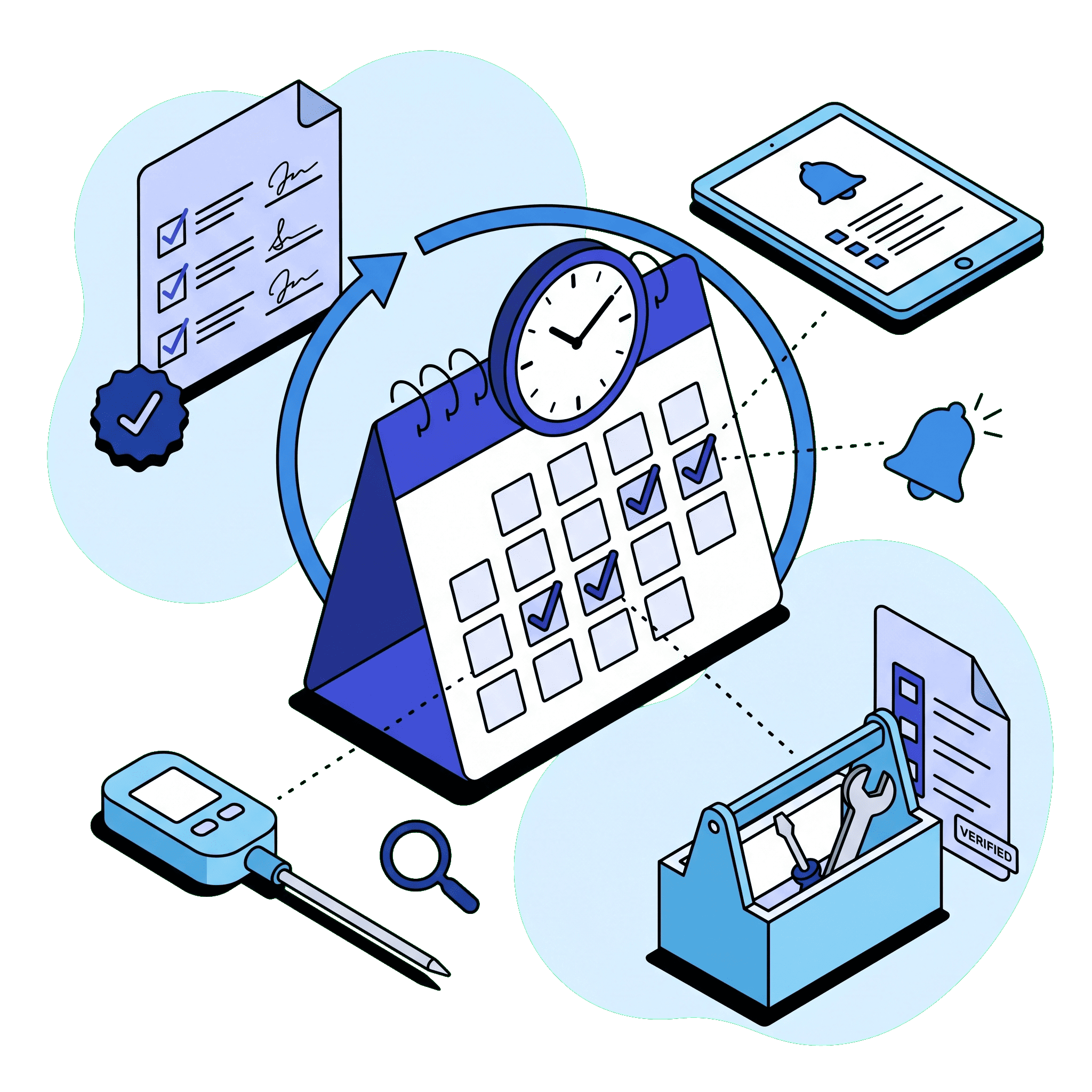
The monitoring programs run on one model with their own result vocabularies rather than a generic pass or fail: pest, environmental, foreign material, personnel hygiene, allergen and utilities. A Zone 1 positive escalates on its own.
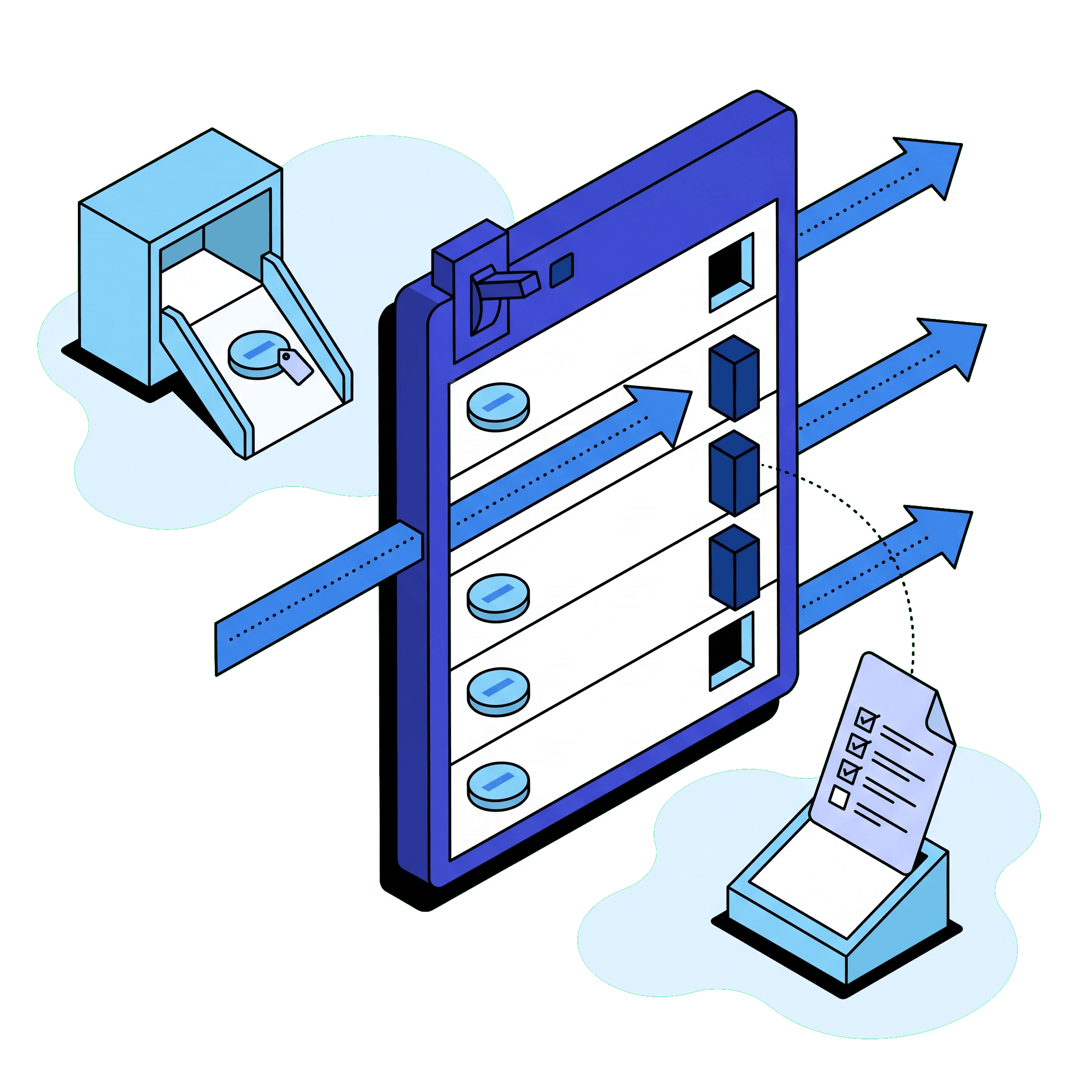
Lots carry a QC status of available, on hold, quarantine, released or rejected, and only two of those can be consumed. Switch positive release on and output is born on hold until the evidence supports a decision.
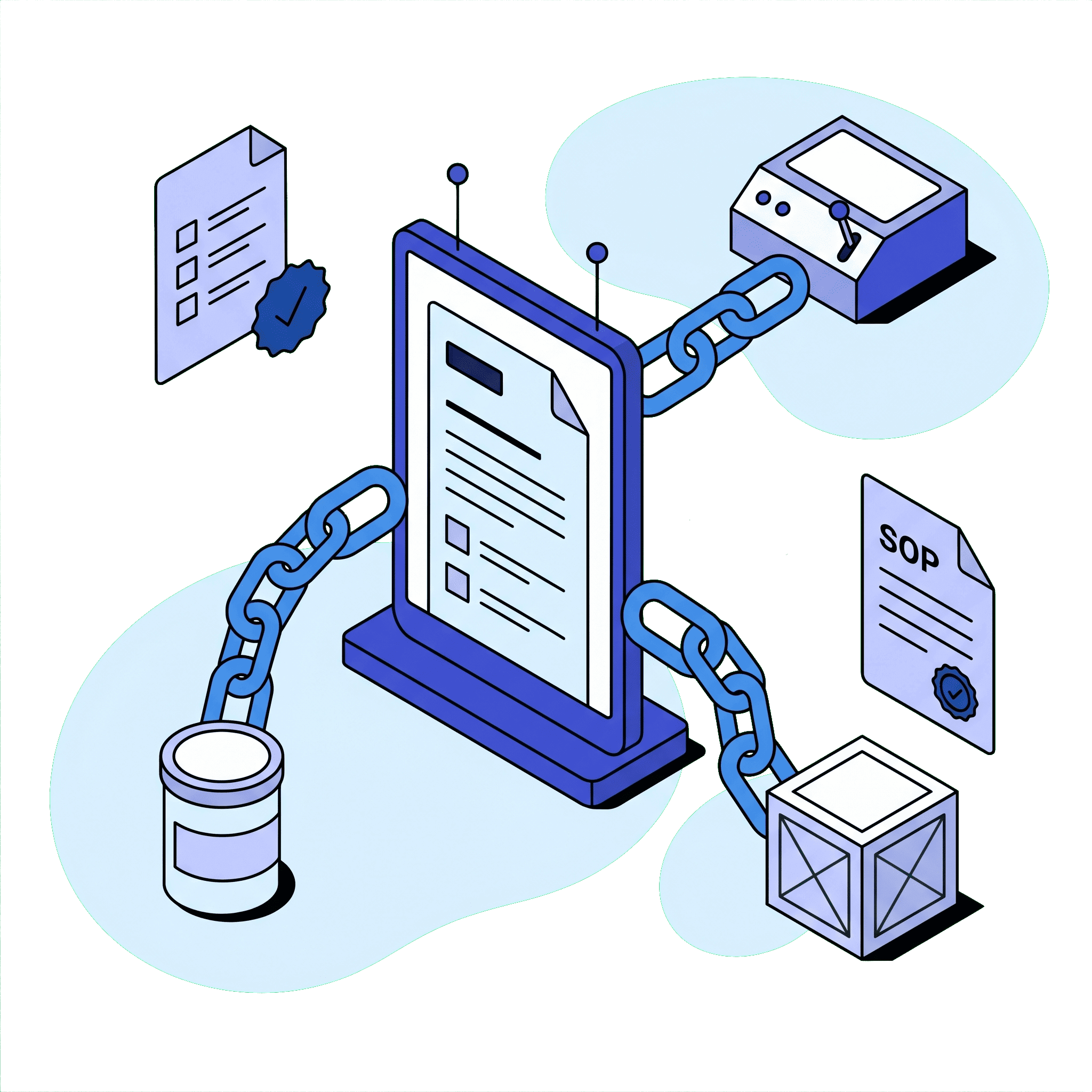
One control library is defined once and mapped to the clauses of every scheme you answer to, so you stop answering the same question three times. Each clause resolves to covered, partial, gap, manual-only or unmapped.
The HACCP plan builder and the compliance gap analysis, as they ship.
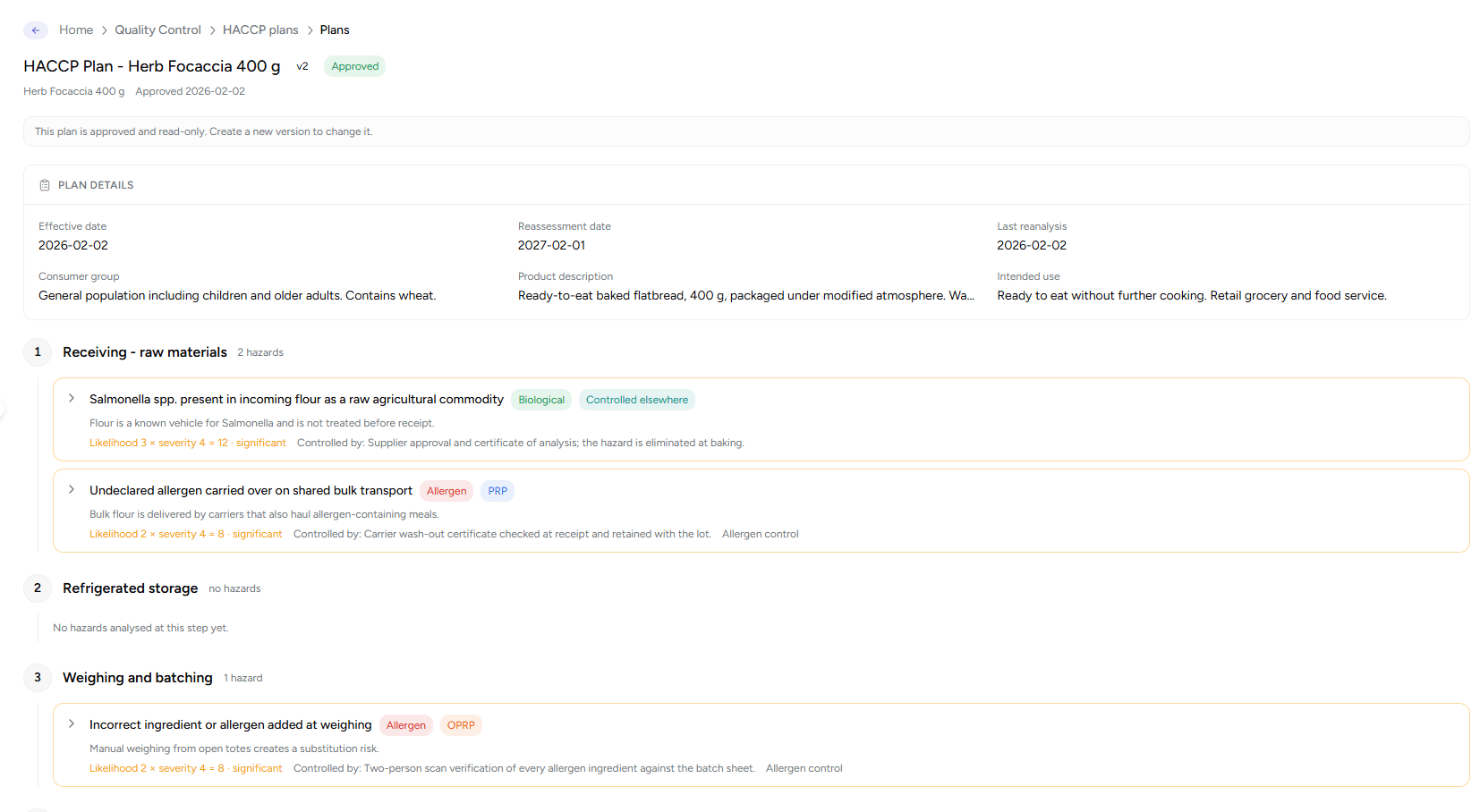
Preliminaries, process flow, hazard analysis and CCPs in one plan. The Codex decision tree is asked one question at a time and every answer is kept, because an auditor tests the reasoning, not the verdict.
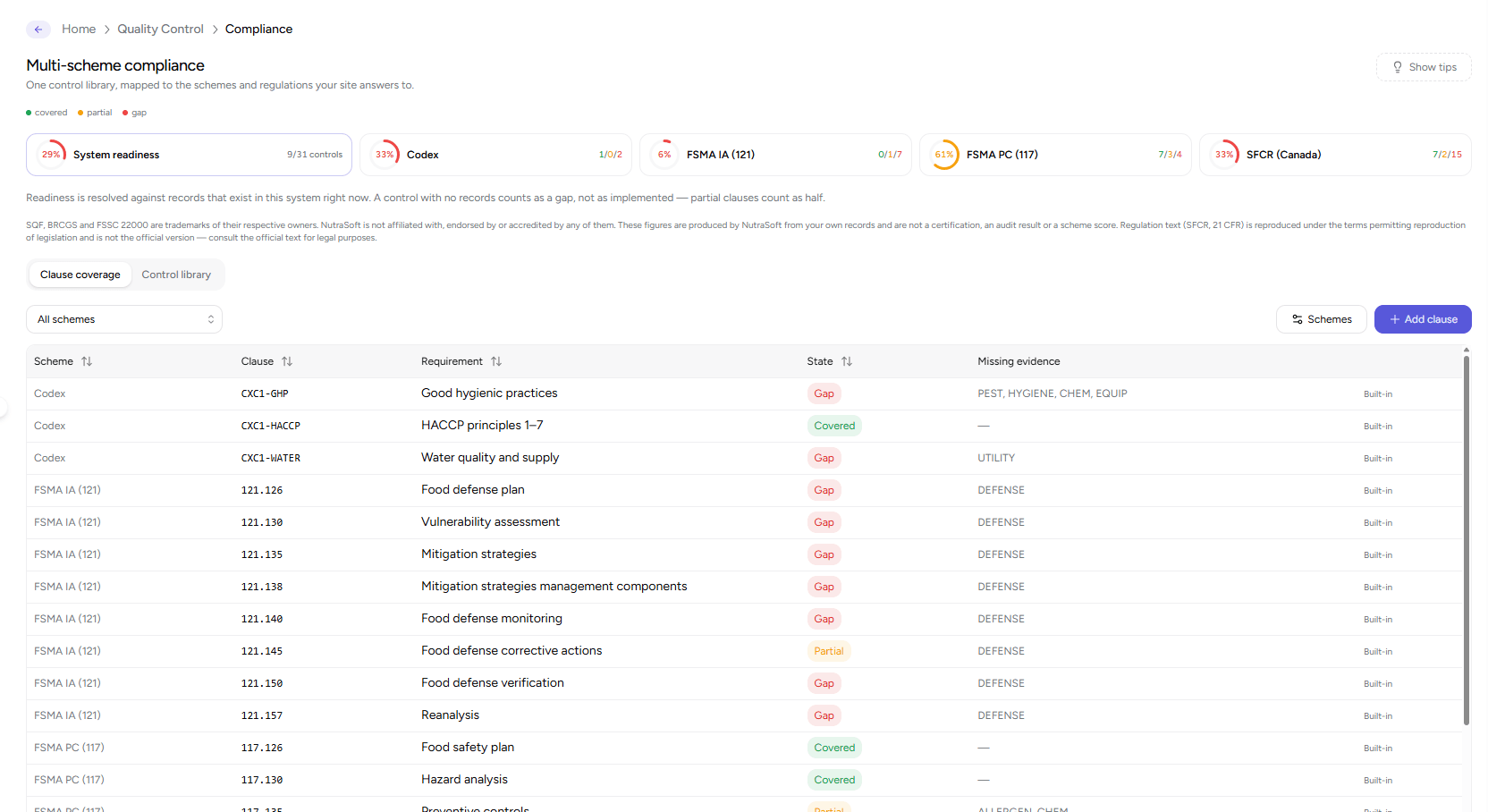
Clause-by-clause readiness with the missing controls named. Coverage is counted from the records you actually have, so the number moves when the plant does the work, not when somebody updates a spreadsheet.
Quality Control is a second workspace over the same records as the ERP, not a separate system with a nightly sync. A disposition writes the lot's QC status, a checkpoint executes on the production run, a monitoring point hangs off the same location tree as your equipment, and a document attaches to any record.
The five stages your site already works through, with the gates enforced by the server instead of by whoever happens to be on shift.
Author the checkpoint catalogue and QC units of measure, register equipment and the location tree, build the inspection templates, and choose your site policies: the HACCP significance threshold, whether stock is held for QC, and whether a CAPA needs a signature to close.
Create the HACCP plan and approve it, stand up the prerequisite programs and their cadences, build the master sanitation schedule and the approved chemical register, and complete the food defense, food fraud and crisis plans.
Operators record checkpoint readings, sanitation and pre-op checks, swab and pest rounds, calibrations, allergen changeovers and health checks. A failing result opens a non-conformance and raises an assigned task on its own.
Work the ranked attention feed and the task queue, drive each deviation through disposition, root cause, corrective and preventive action and verification, then hold or release finished goods against the approved specification.
Read per-clause readiness against records that exist, run a mock recall end to end, and hand the auditor the evidence package, the per-lot dossiers with their gaps and the signature history.
Regulation clauses ship with the product and resolve against your own records. Certification-scheme clause text stays with its publishers.
The gap analysis tells you what is missing before the auditor does, because it counts the records you actually have rather than the boxes somebody ticked in a matrix.
Affected lots assemble themselves, transfer siblings included, and the system stamps the assembly time once against a four-hour target. Printing the pack a second time cannot flatter the result.
Nothing closes without a root cause, a preventive action and a verification, and a scheduled effectiveness review that finds the action did not hold reopens the record on its own.
Once you switch the policies on, an unresolved critical check quarantines the lot, an outstanding pre-op refuses a production start, and a failing specification parameter refuses a release.
Controls are defined once at the Codex and prerequisite level and mapped to each scheme's clauses, so certification, a customer audit and a parent company's report stop being three separate exercises.
A site starting out turns on the records the schemes ask for by name and leaves the enforcement policies off until the process is steady. A certified site scopes HACCP plans to product tags instead of maintaining forty copies, authors its own private schemes alongside the shipped regulation clauses, and drives the whole program off figures derived the moment they are read. The quality screens, labels and validation messages are served in English, French, Spanish and Portuguese, so a bilingual plant signs the same record in the language the operator works in.
What food manufacturers ask before they move a food safety program off paper.
Food safety quality management software holds the records a food plant's safety program produces and enforces the rules around them. NutraSoft covers the HACCP plan, deviations and CAPA, recalls, prerequisite programs, sanitation, calibration, finished-product testing, supplier approval and audit readiness in one application, over the same database as production.
Yes. Plans are versioned and scoped to a product or a product tag, with Codex preliminaries, a process flow, hazard analysis on a 1-5 likelihood by severity matrix, and the Codex 2022 decision tree stored as all four answers. Approval is refused while a significant hazard is undetermined or a CCP is incomplete.
A deviation cannot close until disposition, root cause, a root-cause category, corrective action, preventive action, verification, an effectiveness criterion and a review date are all recorded. The criterion is written before the outcome is known, and if the scheduled effectiveness review finds the action did not hold, the record reopens automatically.
Yes, and it never touches real stock. A drill assembles affected lots from forward genealogy including transfer siblings, resolves customer impact through invoices, and produces the evidence package. Assembly time is stamped once, the first time that package is produced, and reported in minutes against a four-hour target.
The compliance engine supports them, mapped to the same control library as everything else. NutraSoft does not ship SQF, BRCGS or FSSC clause text, because that text belongs to its publishers. Your site transcribes clauses from its licensed copy of the standard, or authors a private scheme, and maps them to the shipped controls.
Pest control, environmental monitoring with hygiene zones, foreign material including the glass and brittle plastic register, personnel hygiene and fitness to work, allergen management with changeover verification, utilities, the approved chemical register with its SDS gate, the master sanitation schedule, pre-operational verification, health checks and the visitor log.
Signing re-authenticates with a password, so an open session is not enough. The signature snapshots the signer's name, locks the record and seals it against later change, so an edit after the fact is detectable and visible.
Approval is scoped per material, not per company, so a supplier cleared for packaging film is not thereby cleared for an allergen-bearing ingredient. Every change is recorded with who, when and why, and nothing is erased. You decide whether an unapproved or expired supplier is blocked at receiving; that policy ships switched off.
It is a sibling application with its own address, navigation and permissions, running on the same records and the same sign-in as the ERP. QA gets a workspace built for the job while operators keep the production screens they already use. Quality Control is included in the Enterprise plan.
Bring your HACCP plan, one non-conformance that keeps coming back and last year's audit findings. We will show you what the gap analysis says about them.
Continue learning about our other modules:
