Double-entry accounting inside your ERP. Every invoice, supplier bill, payment and production close posts itself the moment the document is saved.
NutraSoft's accounting module books cost of goods sold lot by lot from the exact lots that left your building, carries production cost through work in process into finished goods, and gives you a month-end close you can put in front of an auditor. It is included on both paid manufacturing plans.

Many small to large food and beverage manufacturers live with two versions of the truth: an ERP that knows what was made and shipped, and a bookkeeping package that finds out later. NutraSoft's accounting module closes that gap by putting a full double-entry ledger inside the system that already holds your lots, recipes, production runs and shipments.
Every operational event posts as it happens, not on a nightly run, so your books and your plant cannot tell two different stories.

Every invoice, bill and production close posts the moment it is saved.

Open balances, receipts, payments, credit memos and bank reconciliation in one place.

Cost of goods sold booked lot by lot, from the exact lots that left your building.

Sales invoices, supplier bills, production closes, stock adjustments and transfers raise their own journal entries as they are created. A posted entry is never edited: a correction is a reversal plus a replacement.
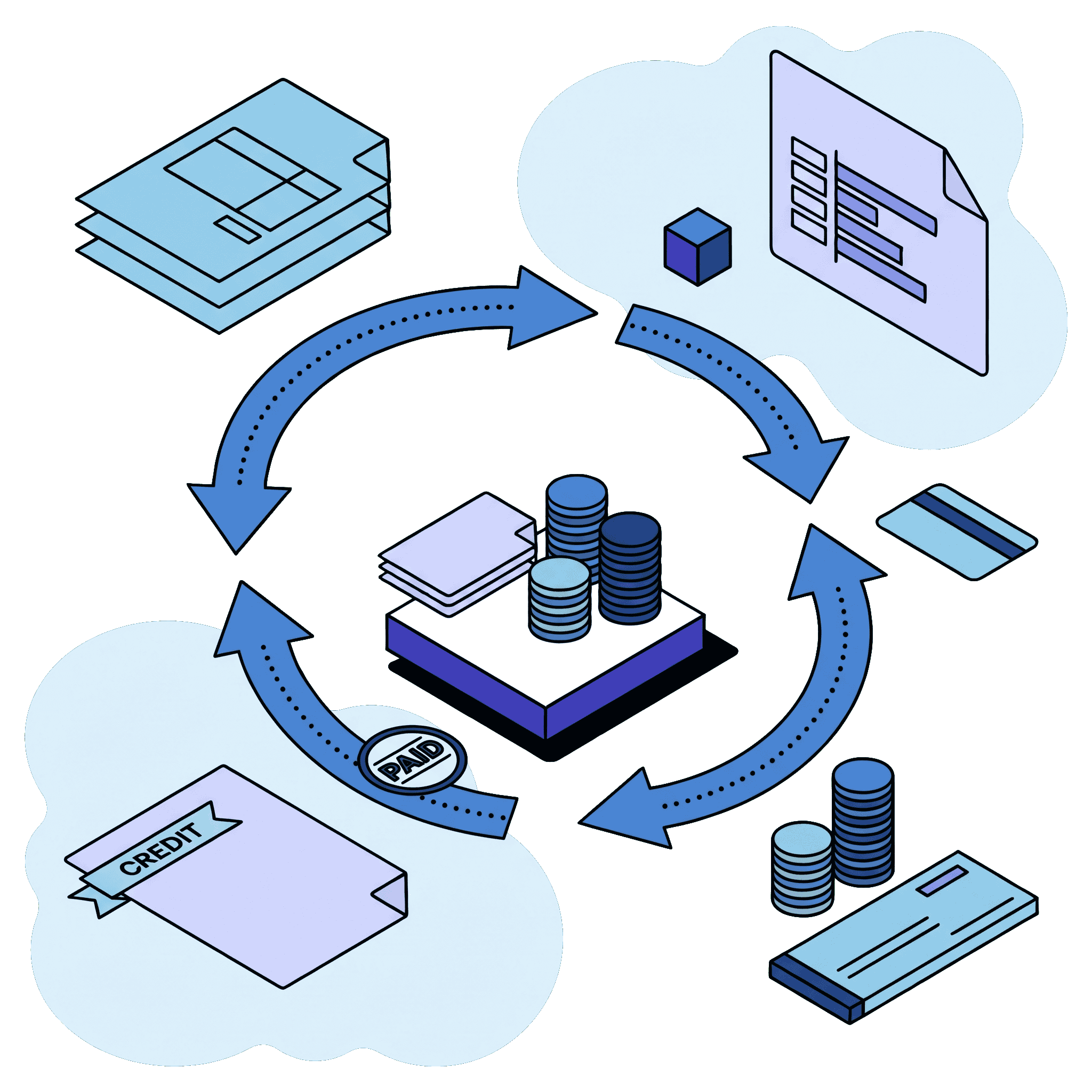
See what is still owed on every invoice and bill, how late it is, and the payment that cleared it. Receipts, disbursements, credit memos in both directions and cheques are all worked in the same application.

Cost of goods sold is booked from the exact lots recorded against each invoice, with its own cost line for every lot, and a posted cost is never edited. A closed production run posts its whole work-in-process chain in one entry.

Import the statement your bank actually gives you, review scored match suggestions that state their reasoning, and complete a reconciliation only when it ties. A closed period takes no postings from anyone, and reopening it needs a written reason.

Trial balance, balance sheet, profit and loss, ledger detail, journal register, budget versus actual, tax worksheets and fixed-asset reports, all reading the same ledger. Two more exist to answer whether the books can be believed.
Accounting runs as its own application beside the ERP and the quality app, over the same sign-in and the same records.
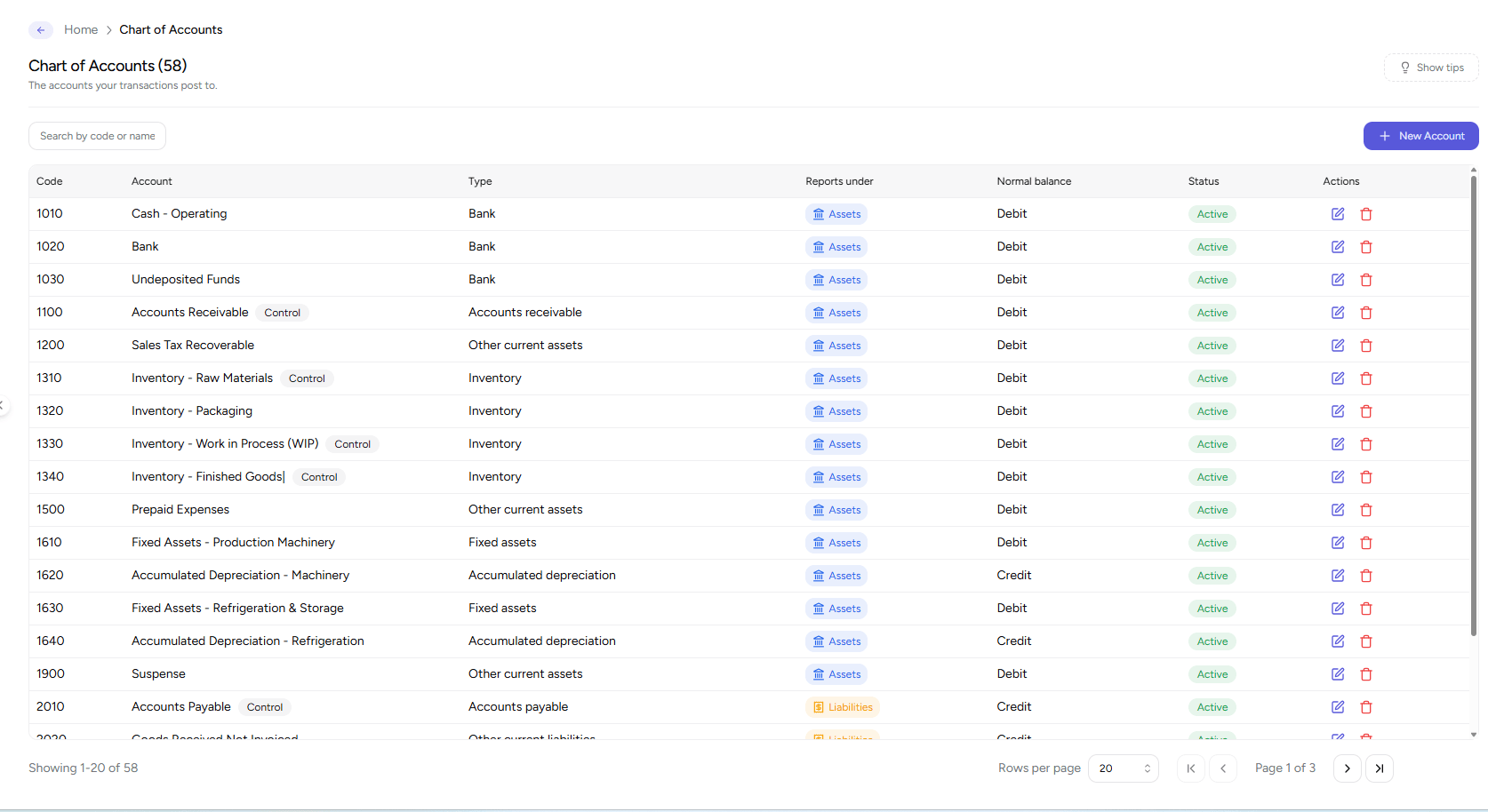
A seeded 45-account food-manufacturer chart: Inventory - Raw Materials, Inventory - Packaging, Inventory - Work in Process. Account types and categories with parent roll-up, and control accounts nobody can post to by hand.
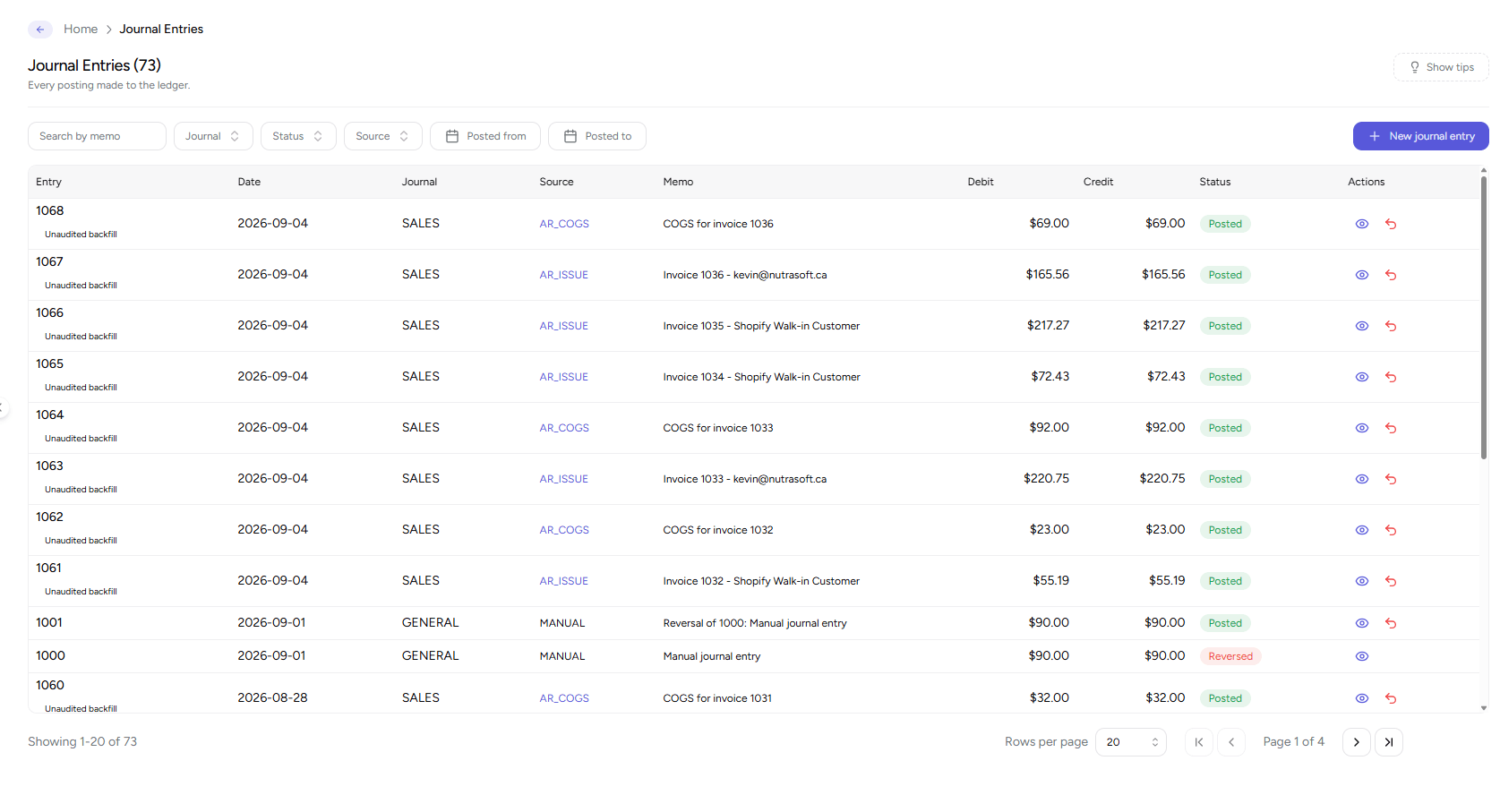
Each entry names the document behind it, recording the sale and the cost of the goods that left as separate postings. History rebuilt from existing records is labelled as rebuilt rather than passed off as audited, and a reversal leaves the original entry in place instead of deleting it.
The ledger is not a separate system waiting for a nightly file. It reads and writes the same records your team already works in:
Standing up a general ledger is a project. NutraSoft breaks it into steps that each end in a state you can check:
Confirm your functional currency and fiscal year end, seed the food-manufacturer chart of accounts, generate the fiscal calendar, and map every posting role to an account. The setup stepper names any role still unmapped.
Add bank accounts from chequing through line of credit, enter your own tax rates with their recoverability and treatment, register asset categories and fixed assets, and draft your budgets.
NutraSoft can rebuild your history with you, first showing how much past cost is hard evidence and how much is estimate, by period and product type. Then move the ledger from off to active. Readiness refuses the move until every required posting role resolves.
Invoices, bills, production closes, stock adjustments and transfers post themselves. You record receipts and payments, allocate them against open documents, raise credit memos, issue cheques and import the bank statement.
Complete the reconciliation, run the close checklist, seal the period, then read the trial balance, the sub-ledger reconciliation and the ledger integrity report. At year end, post the closing entry to retained earnings.
The ledger is built around controls that are enforced rather than described:
A closed run posts each consumed lot and its operation cost into work in process, and the finished good takes the total.
Posting happens as the work is recorded. There is no nightly sync to fail quietly and leave two systems disagreeing.
The checklist result is written onto the audit record the close creates, so months later you can show that somebody looked before the period was sealed.
Inventory, quality and accounting are separate applications over one login, one permission model and one set of records, in English, French, Spanish and Portuguese.
Accounting is core ERP on both paid manufacturing plans rather than a priced add-on, with granular permissions deciding who may post, void, close or approve.
Revenue, cost and inventory accounts can be set for a single product or for the whole company, and the product's own account wins, so a document never has to be touched. Budgets move from draft to approved to locked with versioning, reports carry their own permission keys, and your books are visible only to your own business.
Direct answers to what controllers and plant owners ask about the ledger, lot costing, month-end close and sales tax.
Manufacturing accounting software is a general ledger that understands production, not just invoicing. It values inventory and cost of goods sold from real production and lot records, posts work in process as materials are consumed and finished goods are made, and keeps receivables, payables, cash and fixed assets in the same set of books.
From the exact lots that left your building. When an invoice ships, NutraSoft reads the lots recorded against it and books cost of goods sold lot by lot, with one cost line and one inventory relief line per lot, in the same step as the shipment. A lot with no cost of its own is valued at the product's current cost rather than at zero, and a posted cost is never edited: a correction is a reversal plus a replacement.
A closed production run raises one journal entry covering the whole work-in-process chain. Each consumed lot is relieved on its own line, operation cost is absorbed, by-products are credited back, and the finished good absorbs the residue. Work in process clears to zero on its own, not with a balancing figure, and a material valued at today's product cost marks the entry Estimated.
Closing a period runs a checklist first. Seven checks cover unposted documents, posting failures, the trial balance, sub-ledger controls, bank reconciliation, depreciation and draft entries, each returning pass, warn or block with the specific rows that failed. The result is written onto the audit record the close creates.
Yes. NutraSoft imports statements from CSV, OFX and QFX, and re-importing an overlapping date range inserts nothing and reports the duplicates. Reconciliation offers scored match suggestions with a stated reason, never applies one on its own, and refuses to complete while opening balance plus cleared items does not equal the closing balance.
Yes, for up to two rates per document, which covers GST plus PST, GST plus QST, a single HST or a US state rate. You enter your own rates and labels. Purchase tax splits into a recoverable input credit and a non-recoverable cost, and three worksheets report tax charged, tax paid and the net position. They are worksheets to prepare a return from, not a filed return.
Yes, if they work in QuickBooks Online. The QuickBooks Online integration, included on both ERP plans, sends invoices and bills to QuickBooks as they are saved, along with the customers, suppliers and products on them, and can also send journal entries for cost of goods sold, production and inventory adjustments, each with its own switch. The NutraSoft ledger can run beside it. If both books carry those cost entries, switch them off on one side so cost is not booked twice.
You can start clean or reconstruct it. NutraSoft rebuilds past entries from your operational records using the same posting rules the live system uses, grading every lot cost on seven levels of evidence and reporting the evidence mix by value, period and product type. You preview that mix first, and NutraSoft runs the reconstruction with you.
Both paid manufacturing plans. Accounting is core ERP at NutraSoft rather than an add-on, so the Food Manufacturing Software plan and the Enterprise plan each carry it with no separate ledger licence. Granular permissions then decide who does what, so a bookkeeper can reconcile without being able to close a period.
One ledger, one set of records, one sign-in. See how NutraSoft posts your invoices, supplier bills and production runs as they happen, and what your month-end close looks like when the checklist runs itself.
Continue learning about our other modules:
